Tuesday, May 9, 2017

The Many Uses of a Hockey Stick


I play hockey. It doesn’t really fit with my minimalist or environmentalist values and it sure as hell doesn’t fit with my otherwise frugal lifestyle, but I love the game. 

I’m not perfect, nor am I trying to be. However, I still try to minimize the downside to my hobby. Case in point – hockey sticks.

Hockey sticks break. The expensive ones break and the cheap ones break. It’s just a fact of the game. What doesn’t have to be a fact of the game, however, is that once a hockey stick breaks its life is over. No, there are actually many uses for a hockey stick once it no longer functions for its original purpose.

Perhaps the easiest way to repurpose a hockey stick is to convert it into a walking-stick. I’ve used the sticks as gifts for my friends and family that enjoy hiking. The sticks are strong, but lightweight, and perfect as a walking stick. 

 Most often on my hockey sticks, the blade is the first part to break, which leaves an intact shaft. It’s the easiest thing in the world to turn that hockey stick shaft into a walking stick (if you’re using wooden hockey sticks, at least). Simply cut off the remaining part of the blade, drill a hole in the top end of the shaft, tie a loop of rope in the drilled hole for nice wrist loop and then you’re done.

I’ve used my sawed-off hockey walking sticks while hiking many times and people can’t help but comment on it. Usually when I encounter another hiker, they’ll do a double take and say, “Is that a hockey stick?” and when I confirm that it is, they usually follow up with, “that’s awesome!”

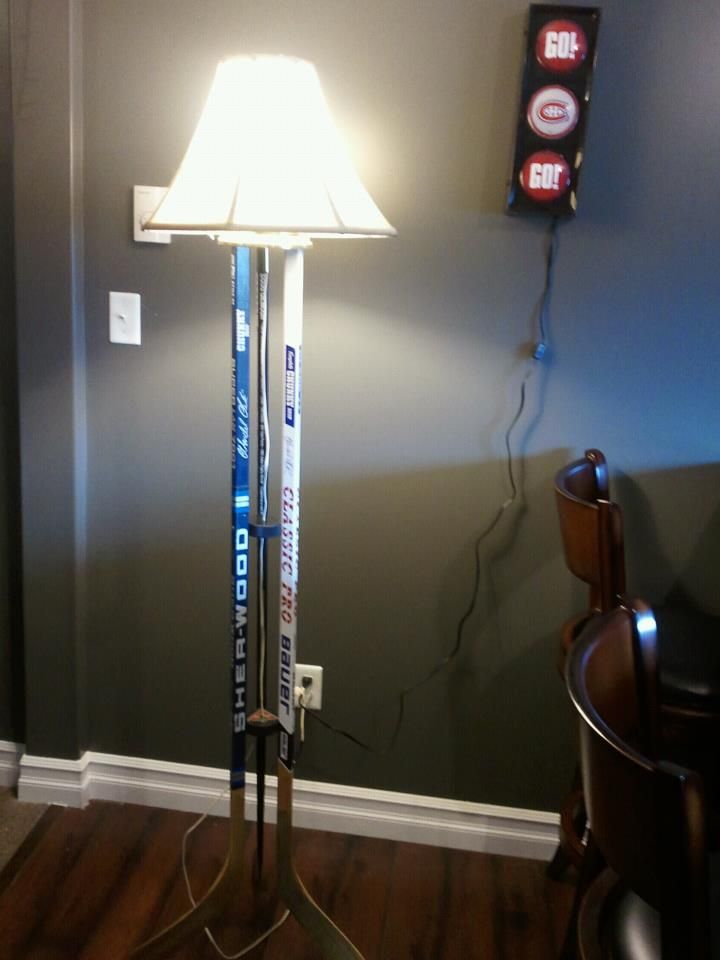
There are a hundred other ways you can use a hockey stick after it no longer works for its original purpose. You could make a chair, or lamp, or bottle opener, to name just a few examples.

-D

Monday, May 8, 2017

Five Minimalist Things and One Minimalist Fail


In this semi-regular post to the blog, I will tell you about five minimalist things I've done recently and one minimalist fail.

1) I realized that as of this month, I have been wearing the same awesome pair of classic canvas Vans shoes for one year. They've only needed to be cleaned once and still look and feel the way they did the day I bought them. I am a newly converted fan of this brand! I usually use up even a quality pair of shoes in 6-10 months because of the large amount wear and tear I put on them during my work day and active hobbies. This pair has many miles on them and has walked me all over Florence and Venice as well as closer to home. I wonder, how long will they last?

2) Yesterday I was at the mall doing a volunteer gig for work. Although I ended up walking around (what my spouse calls, “the burning sun of American consumerism”) for about an hour, I left the mall without making a single purchase.

3) Friday, I went out with a friend for her Birthday celebration! I drank $3 iced-tea instead of a $9 martini and saved my limited resources for purchases that align better with my goals and values.

4) I sewed myself a dry-bag that I needed with materials I already had on hand instead of buying new. (I saw much lower quality ones than I was able to make myself for $10 at the mall!)

5) I combined cleaning products that were spread among multiple partially used bottles to cut down on the clutter under the kitchen sink. (Reminder to self, I do NOT need any more cleaning products for a while.)

FAIL) I ordered a latte at one of my favorite cafes for a Sunday treat and to take advantage of the wifi for writing M&M blog posts. Unfortunately, because my order had to be changed for lack of an important key ingredient, I took my eye off the ball and forgot to ask for a "for here" mug instead of the "to go" cup. This meant I had the guilt of tossing the one-time-use cup it in bin. Ugh. I felt terrible.

 What have been your minimalist wins and fails lately? 

Friday, May 5, 2017

Quality Over Quanity


There are many life lessons that we as humans learn along our journey. Some lessons we learn early and we learn once, never to be forgotten. Lessons like, don't grab hot things off the stove or look both ways before crossing the road are ingrained early.

Then there are the life lessons which happen later. These are a little harder to learn. For me it's lessons like, if you eat a lot of sweets you will gain weight. (Sigh, but NUTELLA!!!) Or lessons like, if you procrastinate, you will become stressed and may be courting future regrets. (Ugh.)

But the number one life lesson which I need to continually re-learn is Quality Over Quantity. In a world which is constantly trying to sell you, this can be easily learned and then quickly forgotten.

It's difficult to avoid the selling that is being thrown at us every day in both subtle and blatant ways. I look out our kitchen window while preparing a meal and see a big billboard advertising something new every month. I run a search online, and I get "sponsored responses" to my query. I want to buy a shirt. Well, good luck finding one without a logo or name-brand written in such a way to be obnoxious and turn me into a walking advertisement.

Some of the selling we encounter each day is directly selling a physical product but more often the selling is subtle and destructive. Perhaps the most insidious example is when companies want to sell you the idea of your own inadequacy. They want to convince you that you are deeply flawed. That your life is lacking. That you can't be happy without xyz item. After all, how can they sell you something if you feel that you don't need anything?

Only after a company has convinced you that you are not beautiful enough, awesome enough, rich enough, famous enough, or successful enough will they kindly offer you the perfect, magical, overnight solution to their carefully crafted and make-believe problem. And it will amazingly cost you JUST $99.99!

I find that for me, when I start to think that I "neeeeed" something, it's important to take a beat. When I start to question my life, I remember to look within, not without. I ask myself, "Is this message of inadequacy coming from me? Or is it coming from messages I am being bombarded with from the outside world?"

Only you know what is right for you. I can't tell you what you truly need, but for me, buying a "fix" to "problems" like the newest mat lipstick to make me more beautiful, or upgrading my car so that I will "look more successful" only introduce more complications to my life and never solutions.

The reason? Well, NEWS FLASH! No one cares what I drive and no one would notice the mat lipstick. And guess what? You are just as free of these outside opinions as I am! Seriously. No one's opinion but your own matters.

That great quote by Eleanor Roosevelt comes to mind. "No one can make you feel inferior without your consent." This is wise and timeless advice. So before you follow the mindless path of adding quantity to your life, spend a minute considering the quality. Will that lipstick add quality to your everyday life? Or will it just add clutter to your bathroom and unnecessary stress to your already streamlined morning routine? Is that car a necessary purchase that will add quality to your life? Or will it get you from point A to point B just like your current mode of transportation does but at twice the cost?

What life lesson do you find matches a minimalist life? Any advice for staying focused on quality?

Monday, May 1, 2017

An Early Minimalist Lesson: Dad vs. the Muffins

One of my early formative experiences with minimalism was when my family moved to the Mediterranean for half a year in my early teens. The story of that half year would take up a novel's worth of space, not just a blog post. The important thing to know is that we were extremely limited in what we could take. This was a time before we could simply order anything we forgot from Amazon or use technology to bridge the language gap to buy or borrow what was needed. What we had brought with us was exactly what we had. No more and no less.

To angstyteen me, it felt like we had moved to a deserted island. We were put in a position to very literally make the best of what we had on hand. My mother had put an enormous amount of time and energy into researching and planning what we would need most and packed accordingly. She did a great job and we found that we were able to get-by on almost all fronts. But once in a while, a little homesickness would creep in, usually in the form of longing for a familiar food.

Before the big move, my parent's had cultivated a family tradition of breakfast together each day as a touch-point to check in with one another. My dad would often take the lead on the meal-prep making things like muffins, waffles or pancakes from scratch and Dad had plenty of eager breakfast-making assistants in the form of my two younger sisters and myself. I felt so far away from friends and everything that was familiar.

While in Greece, pancakes were easy enough even with our limited access to cooking/baking supplies. Where the real trouble appeared was in the lack of a muffin tin. One morning, a month or so into our trip, I turned sadly to my dad as we discussed the breakfast menu and said, "I really wish we could have muffins." I felt so far away from friends and everything that was familiar.

A little taste of something "normal" would have gone a long way in curing that homesick moment.

Dad must have heard the longing for home in my voice because he paused, looked surprised, and said, "Well, why can't we?!"

I was speechless. Had my dad lost his mind? Was this the absentminded professor thing that strikes my academic dad at odd moments? "We don't have a muffin tin." I replied, as if stating the most obvious thing in the world.

"Bah, that's not a problem!" Dad said, with more enthusiasm than I felt the sad state of breakfast warranted. I was baffled. Dad had really gone off the deep-end this time.

Well, to my hungry-bottomless-pit-teen-glee, we mixed up a batch of muffin batter. I began to think that Dad had a muffin tin hidden somewhere that I didn't know about. Or maybe he was about to MacGyver a muffin tin out of nothing but rubber-bands and duct-tape. But no. My dad just pulled out the same old flat baking sheet we had used a hundred times and started smacking the batter down in sticky little globs on the tin. Before I could overcome my shock, Dad stuck the whole thing in the oven.

My mind began to spin. I wondered, is it still a muffin if it isn't muffin-shaped? Was it even going to bake properly? Should we have Dad evaluated by a mental health professional?

A few minutes later, a bakery-worthy scent wafted through the tiny flat in which we lived. The smell of this favorite breakfast from home caused my sisters to run into the kitchen, squealing with glee.

After explaining to them the experiment underway, we only needed to wait a handful of minutes. The tension in the kitchen built steadily as we sent furtive glances toward the stove.

As the baking time lapsed, Dad finally moved toward the stove. My sisters and I instinctively leaned forward and collectively held our breaths. Out of the oven, Dad pulled the baking sheet. On it sat fluffy baked mountains of dough. They were all golden, crusty top, hot and ready to eat. The oohs and ahhhs which this sight drew from us was reminiscent of fireworks on the Fourth of July.

Admittedly, after this first attempt, it took a little experimentation to get just the right consistency, but from that day on, muffins were back on the family breakfast menu! Their glorious new form closely resembled those fancy muffin tops which upscale bakeries will charge you extra for these days.

I learned a powerful lesson from this experience. The lack of a muffin tin was never keeping me from muffins.

It had been my mistake in believing that an object was necessary for the outcome I desired. Often you can make do with what you have with creativity and the right frame of mind. It was my thought process regarding the need for stuff which had kept me from muffins the whole time!

-L

Saturday, April 29, 2017

The Origin Story of a Natural Minimalist

I didn't know I was a minimalist until my wife told me I was. In fact, I didn't even know that minimalism was a thing until my wife told me. I've just always been a natural minimalist.

I can trace the roots of my minimalism back along my family tree and find the seed in growing up poor. Being impoverished meant my parents had no money to waste on buying me things that I didn't need. Hell, occasionally, they didn't have the money to buy me things that I did need (I'll never forget the winter in fourth grade during which I spent all my recesses inside because I didn't have coat). This spartan childhood seemed to stayed with me and helped shape my minimalist nature.

Another key factor, I think, in my being a minimalist is that I have had a tough time with my career. I started out after undergrad in a job in which I got to travel all over the US, which was great, until it wasn't. A few months of 70+ hour work days and a mugging at gunpoint later, and I quit that job.

I bounced around a couple of part-time gigs until I landed in the field of higher education. I worked doing recruiting and then became an advisor and that was great  -- until it wasn't. The economy recovered from the Great Recession and people went back to work, which meant they weren't going to school. This meant a drop in enrollment and downsizing and again I found myself unemployed.

It's a traumatic event, being let go from a job when you've done nothing wrong. It's even more traumatic when you can't seem to find another job that matches your goals. Again, I bounced around a few part-time or near-full-time jobs. I ate through my savings, but only very slowly. I was under-employed or unemployed but able to afford my rent and other bills much longer than many other people would have been able to in the same situation because of my innate minimalist nature.

When I was working, it was easy to save money because I didn't buy things that I didn't need. My savings saw me through my graduate degree and lasted long enough for me to obtain my next full-time position that matched my goals.

I find satisfaction in my life through experiences, and activities and not through things. For example, I was satisfied with my old box set television even while everyone around me was buying up the latest LCD flatscreens. I didn't mind that my car had over 100K miles on it and didn't look the best. It still ran fine and that was after all the purpose of it. I don't needs stuff. I find happiness elsewhere.

I'm 33 now and have a steady job, a good education, no debt and money in the bank. My wife and I are firmly in the middle class with our combined incomes. I still don't buy things I don't need.

I guess growing up poor and then becoming middle class could have gone one of two ways in terms of buying stuff. I was either going to be as I am now, and continue being someone that just doesn't buy things, or, since I finally had the money to indulge, I was going to become a spendthrift lunatic. Luckily, I followed the minimalist route.

It wasn't until my wife dove into the deep end of the minimalism movement, a necessity when we moved in together into my one-bedroom apartment, that I learned about all of these minimalist pundits that were acting like they discovered something new but were actually just discovering something that I'd been living my entire life. So, I guess what I'm saying is that I probably have a few things that I can contribute to the discussion on minimalism, and that's the reason why I co-created Minimalism and More.

I hope that as my wife and I post more of our ideas, suggestions, and questions, that Minimalism and More becomes a place with a dynamic discussion on what minimalism is, other philosophies that align with minimalism (I'm particularly excited to begin a conversation on anti-consumerism) and how we these interconnected philosophies can lead us all to happier and healthier lives and improve the societies in which we live.

Regards,

-D

Tuesday, April 25, 2017

My Experience with Marie Kondo's "The Life Changing Magic of Tidying Up"


 My Experience with Marie Kondo's "The Life Changing Magic of Tidying Up"

I read Marie Kondo's "The Life Changing Magic of Tidying Up" as a part of my search for writing on Minimalism. What I didn't realize was that I would be undertaking one of my most important personal experiments in years

I approached this book with a weary decluttering heart and a totally skeptical attitude but it turned out... that I LOVE this book. There is a good reason that it is an international best-seller.

I had anticipated a poorly written book thoughtlessly thrown together in an attempt to take advantage of a trendy topic. After all, most tomes on similar topics have barely held my attention, let alone held any advice which I found helpful.

I have never been so happy to be utterly and completely wrong! After reading the first few chapters, I was hooked. I quickly committed to throwing myself down the rabbit-hole and giving Marie Kondo's system for decluttering a try. I can tell you, I have no regrets.

Now, I won't detail Marie Kondo's method for you here. There are plenty of other internet resources willing to attempt condensing her thoughtfully written experiences and unique take on people's relationship with their stuff. But I will tell you my experience with her book and stress that it is absolutely worth reading for yourself. This book can provide insights that no cliff-noted version can hope to achieve. Each time I read the quick and easy to read book, I find new insights and new messages that I can apply to where I am currently on my own "stuff" journey.

With that said, here is my story. Before reading the book, I'd been thoughtfully purging stuff from my life since marrying my lovely spouse about a year earlier. The challenge I faced in this task was trying to condense two complete adult households worth of stuff into a small one-bedroom apartment.

Now I feel that I should preface this by stating that my husband and I were both 30 when we married. So, we had two of almost everything. Two mattresses. Two couches. Two sets of pots/pans/kitchen equipment. Two TV's. Etc. But even with all of that, by modern American standards, we both owned very little "stuff." I had moved around a lot in my adult life to that date, so I hadn't accumulated much that wasn't functional/easy to move. My dear spouse who has lived in the same city since birth and the same apartment for eight years is just a natural born minimalist. (Sorry reader, this guy is taken!) It is one of the many things that I love dearly about my spouse. It almost never occurs to him to buy something he doesn't truly need - awesome.

While I definitely have more stuff than my husband, I lump 50% of my stuff in the maker's-stuff category. I'm an artist and so I have accumulated the tools and supplies natural to that vocation.

Fast-forward one year into our marriage. A LOT of stuff had been culled. (My trips to nonprofit donation drop-off sites were so common they began recognizing my car as I pulled up.) We'd decided on the biggest and hardest stuff like whose TV, mattress, etc. to keep and whose to ditch. But I had gotten to the point with my task were I was having trouble determining what was worth keeping and what was unnecessary.

By this point, we and our stuff fit in the apartment, but something just felt... wrong. I couldn't quite put my finger on it. Yes the cupboards were all full but nothing was falling on our heads in an avalanche when we opened them. We could usually find what we were looking for and certainly nobody was going to nominate us for the TV show Hoarders.

To those of you who have done this "combining households" thing before, yes, my husband and I each had a few precious objects from our single-days that annoyed the crap out of each other. But he had mostly come to grips with living in the same space as my large-and-in-charge knockoff Chinese contemporary-art painting and I had mostly begun to ignore his female-shop-mannequin turned hat-stand (just the top half of the mannequin-- yikes.) It wasn't those objects which were causing me trouble.

I just couldn't put my finger on why something about our stuff situation felt "off." In an attempt to resolve the feeling, I had begun to give an enormous amount of thought and research to clever storage methods and had employed them in several areas of the apartment. I thought maybe my feeling of unease could be resolved if our storage looked prettier. Or maybe if we "created more space" with some new storage techniques. But still, something was not right.

Then Marie Kondo lifted the cloud I was living under in just a few sweet and endearing chapters. I wasn't crazy! MK understood. She mirrored back to me my own anxiety about my stuff while assuring me that not only was I not alone, but she could and would help to solve my problem. Cue the choir of angels singing the Hallelujah Chorus, people!

As I stated earlier, I won't detail Marie Kondo's method for you here. But I will say that I employed her technique with one personal deviation which I may write about at a future date. It took around five months for me to get through everything and involved many more trips to the non-profit resale donation location. But to my surprise, I really did enjoy the process thanks to MK.

I have been filled with so much more joy and peace in our living space. We have less clutter and have achieved a stuff/life balance in our space. We have exactly what we need and nothing that doesn't bring joy into our life. Most amazingly, as a result of following MK's method, unnecessary stuff has not found its way back into our apartment even more than a year later. I now find myself more able to focus on what is important in my life and find the time and energy to dedicate to those things.

I am grateful to Marie Kondo for sharing her wisdom and hope that you benefit as much as I have.

If you are an MK fan-girl like me, or have another guru you'd like to recommend, let us know in the comments below!

-L